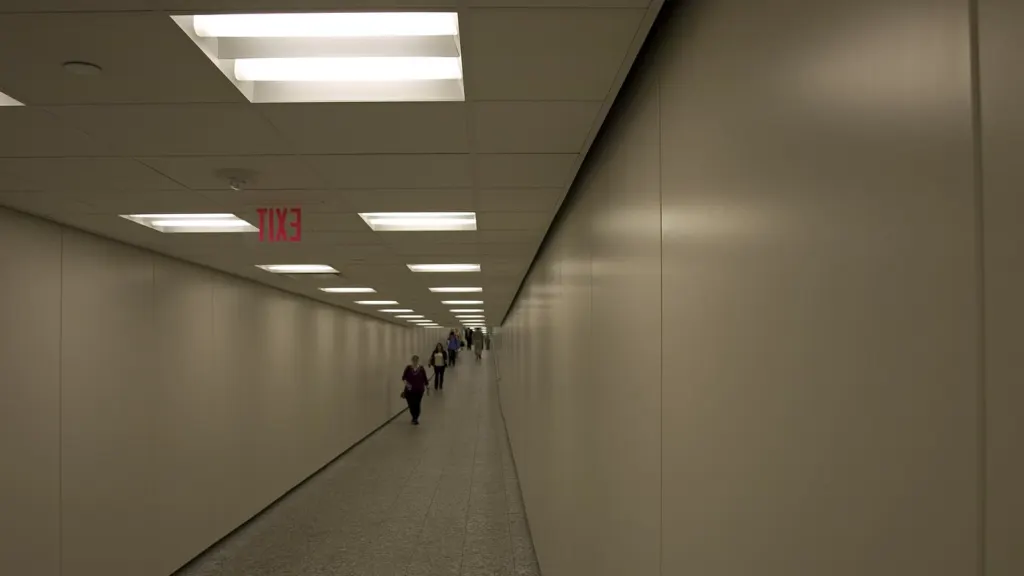
The six miles of tunnels under downtown Houston
Photo: Ymblanter, CC BY-SA 3.0, via Wikimedia Commons.
Beneath downtown Houston, about 20 feet underground, runs a network of pedestrian tunnels about six miles long connecting roughly 95 city blocks. Office workers use them to move between buildings without facing heat, humidity or rain.
The first tunnel was built in the 1930s by theater owner Will Horwitz to connect his theaters. The network grew in the 1960s and 1970s as developers linked new office towers. Each segment is owned by the building above it.
The business underground
The tunnels hold food courts, coffee shops, dry cleaners, banks, shoe shine stands, pharmacies and other services. Most are small businesses that depend on office workers. The tunnels are generally open only on weekdays during business hours, and many shops close by mid-afternoon.
After 2020
The pandemic emptied downtown offices, and tunnel businesses lost most of their customers. Many closed. Remote and hybrid work has kept office occupancy below pre-2020 levels, and tunnel traffic has not fully recovered.
Debate
Critics argue that the tunnels drain life from downtown streets, keeping people below ground. The city and the Downtown District have invested in street-level improvements to attract people above ground.
Still, the tunnels remain a useful part of downtown on hot or rainy days, and the businesses that remain depend on them. Their future depends on how many workers return to downtown offices.
More in Business
ODL’s Impact Rated Fiberglass Entry System with Keystone Frame Technology Earns 2026 Best of Products Editors’ Pick
 By Yvette Okafor ·
Pokeworks Drives Texas Expansion Through Flexible Real Estate Strategy
By Yvette Okafor ·


ASPR AI Launches Private Sales Agent Studio With Forward Deployed Engineers and 50+ Language Meeting Notetakers
By Yvette Okafor ·