CenterPoint’s post-Beryl grid rebuild: where Houston’s resiliency work stands this fall
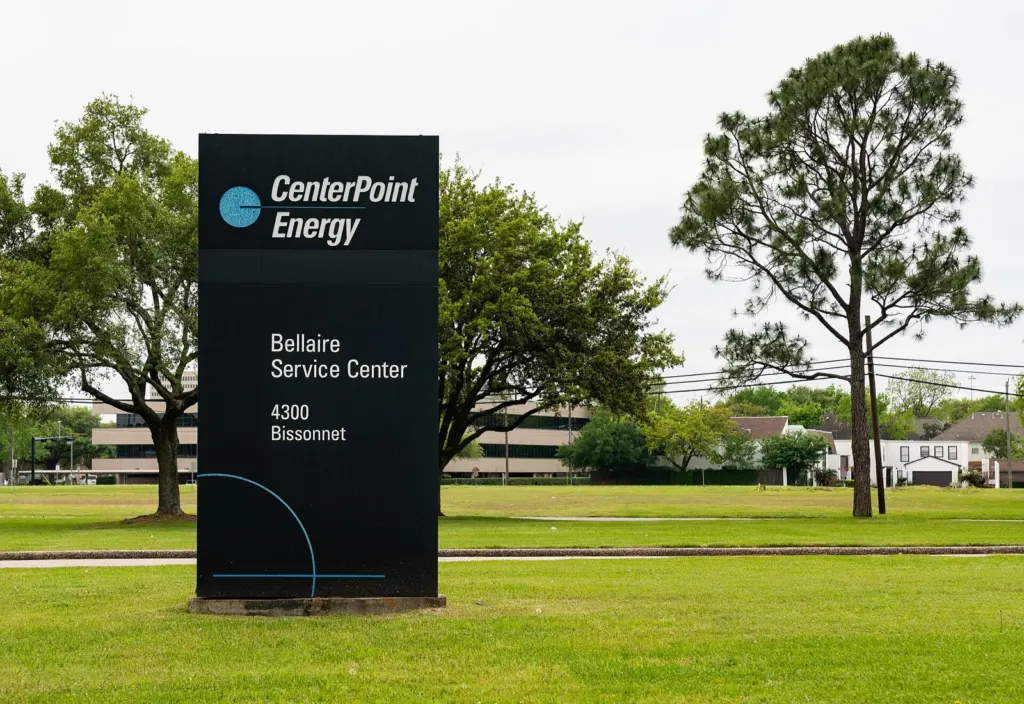
Photo: Tony Webster via Wikimedia Commons, CC BY 2.0
Two years after Hurricane Beryl knocked out power to more than two million CenterPoint Energy customers across Greater Houston, the utility’s rebuild of its local grid is at its busiest point yet. In its latest progress report, released Oct. 6, CenterPoint said nearly 3,000 crew members were working across the region on the Greater Houston Resiliency Initiative as of Sept. 30, the program it launched in August 2024 in the weeks after the storm.
For Houston households, the work shows up in three places: new poles and buried lines in the neighborhood, fewer branches hanging over the wires, and a few extra dollars on the monthly electric bill. Here is where things stand as the 2026 hurricane season heads toward its Nov. 30 close.
What has been built so far
According to CenterPoint’s October update, the program has so far:
- installed more than 83,500 storm-resilient poles built to better withstand high winds;
- trimmed or removed higher-risk vegetation along more than 14,000 miles of power lines;
- moved more than 900 miles of power lines underground; and
- installed more than 850 automation devices that can “self-heal” the system by rerouting power around a damaged section of line.
The pace has picked up over the summer. In a June 24 update, the company reported about 69,000 new poles, 11,500 miles of cleared vegetation, 600 miles of undergrounded lines and 650 automation devices. The June report also counted more than 150 advanced weather stations installed across the service area to help the utility track conditions as storms approach.
CenterPoint says the work is on track to prevent 150 million customer outage minutes in 2026, a measure that combines how many customers lose power with how long they stay dark.
“Our historic GHRI progress continues, and we remain focused on building a more resilient and reliable grid for the millions of customers we are privileged to serve,” Nathan Brownell, CenterPoint’s vice president of resilience and capital delivery, said in the October release.
Why trees get so much attention
Much of the effort goes into vegetation. CenterPoint has said that high-risk vegetation is the leading cause of outages in Houston, and Beryl’s damage was driven in large part by falling trees and limbs on overhead lines. Under its newest state-approved plan, the utility is moving to what it calls a three-year trim cycle, meaning crews aim to clear vegetation along each stretch of line at least once every three years.
Energy economist Ed Hirs told KHOU last November that the utility had historically trimmed vegetation on only about 20% of its overhead lines, and that much of the hardening work now under way was prompted by the May 2024 derecho and Beryl.
The $2.9 billion plan behind the work
The longer-term roadmap is CenterPoint’s 2026-2028 Systemwide Resiliency Plan, which the Public Utility Commission of Texas approved in November 2025. The company originally asked for $5.75 billion in January 2025. After months of negotiation involving city leaders, regulators and consumer advocates, the approved plan came in at about $2.9 billion, roughly half the original request, as KPRC 2 reported.
Beyond poles, undergrounding and tree trimming, the plan includes stronger transmission structures and, according to the company, raising 99% of its substations above the 500-year floodplain, an important detail in a region where flooding, not wind, is often the bigger threat.
What it means for your bill
Houston residents do not buy electricity from CenterPoint. In the competitive Texas market, customers pick a retail electric provider for the power itself, while CenterPoint owns and maintains the poles and wires and charges delivery fees that the retailer passes through on each bill.
Those delivery fees are where resiliency spending lands. Under the approved plan, local TV stations reported, the charge rises by about $1 a month starting in 2026 and grows gradually until customers are paying about $4 more a month by 2028. That comes on top of other rate changes since Beryl. KPRC 2 estimated last fall that a Houston customer using about 1,000 kilowatt-hours a month already pays CenterPoint about $64 in delivery charges alone, separate from the cost of the electricity.
Not everyone is convinced customers should carry that cost. Some residents interviewed by KHOU after the approval said a stronger grid was overdue, while others questioned why the bill should fall on ratepayers rather than the company.
How to see the work on your street
CenterPoint publishes a Community Progress Tracker map on its website that shows resiliency upgrades by neighborhood, including where poles have been replaced and lines buried.
A few practical steps still matter no matter how much hardening gets done:
- Sign up for outage alerts through CenterPoint’s website or app so you receive restoration estimates by text or email.
- Report downed lines to CenterPoint or 911 right away and keep well clear; never assume a fallen line is dead.
- Know your trees. Utility crews clear vegetation around lines, but limbs over the service drop that runs to your house are generally the homeowner’s responsibility. Hire a qualified line-clearance arborist rather than trimming near wires yourself.
- Plan for medical needs. Customers who rely on powered medical equipment should register with their retail electric provider as critical-care or chronic-condition customers and keep a backup plan.
What to watch next
The real test comes with the next major storm. Better poles and buried lines should mean fewer outages and faster restoration, but no grid along the Gulf Coast is storm-proof, and the utility’s targets are measured in minutes avoided rather than outages eliminated. Regulators will also keep reviewing how much of the work customers pay for as the three-year plan rolls out through 2028.
For now, the bucket trucks and pole crews working through Houston’s neighborhoods are the most visible sign that the lessons of July 2024 are being built into the system, one circuit at a time.