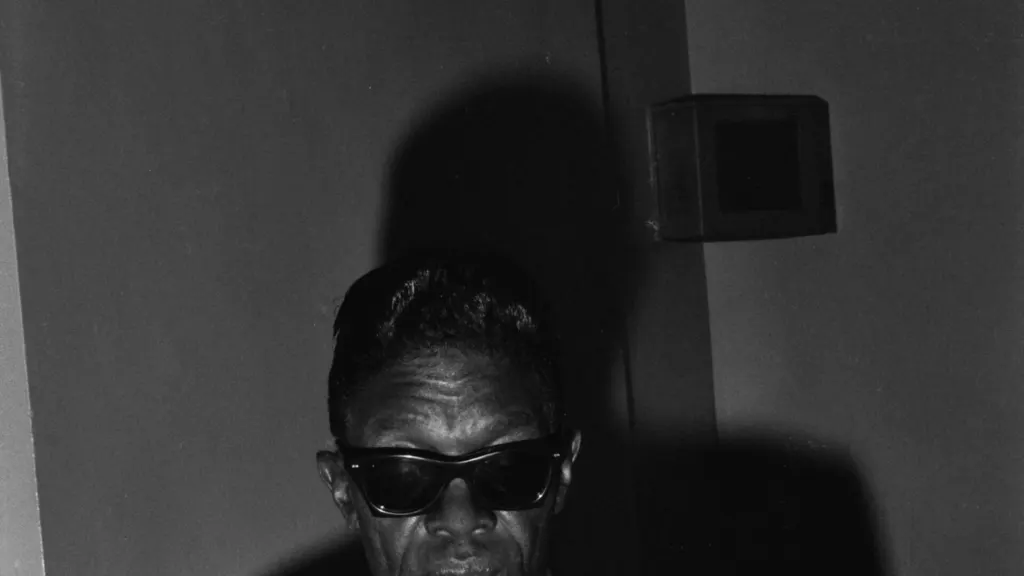
Lightnin’ Hopkins, the Third Ward bluesman who recorded hundreds of songs
Photo: 33stradale, CC BY-SA 3.0, via Wikimedia Commons.
Sam John Hopkins was born in 1912 near Centerville, in East Texas, and grew up picking cotton and playing guitar. As a child he met the blues singer Blind Lemon Jefferson and later played with his cousin Alger “Texas” Alexander.
He moved to Houston and settled in the Third Ward, playing on street corners and in bars on Dowling Street, now Emancipation Avenue. In 1946 he went to Los Angeles to record and received the nickname Lightnin’.
The recordings
Hopkins recorded for many labels, often for cash with no royalties. He made hundreds of recordings, more than most blues musicians of his era. His style was loose and improvised, often with lyrics made up in the moment about events in his life.
In 1959, folk music researchers sought him out in Houston, and he became a star of the folk and blues revival. He played at Carnegie Hall and toured the United States and Europe.
Houston
Despite his fame, Hopkins stayed in Houston and lived in the Third Ward for most of his life. He was a fixture in local clubs. The 1967 documentary The Blues Accordin’ to Lightnin’ Hopkins captured his life.
He died in 1982. A Texas historical marker in the Third Ward honors him, and a statue stands in Crockett. Musicians in Texas and elsewhere still cite his influence.
More in Spotlight

2027 KIA SELTOS X-LINE SX AWD AND TELLURIDE X-PRO SX PRESTIGE EARN TOP HONORS AT TEXAS AUTO WRITERS ASSOCIATION “TRUCK RODEO”
 By Yvette Okafor ·

Hyundai and Texas Children’s Continue Partnership to Advance Child Passenger Safety Across Greater Houston
By Yvette Okafor ·

Bread of Life opens Knowles-Rowland House, 31 apartments for Houstonians leaving homelessness
 By Dana Kowalczyk ·