Harris County’s higher tax rate is about to show up on your property tax bill
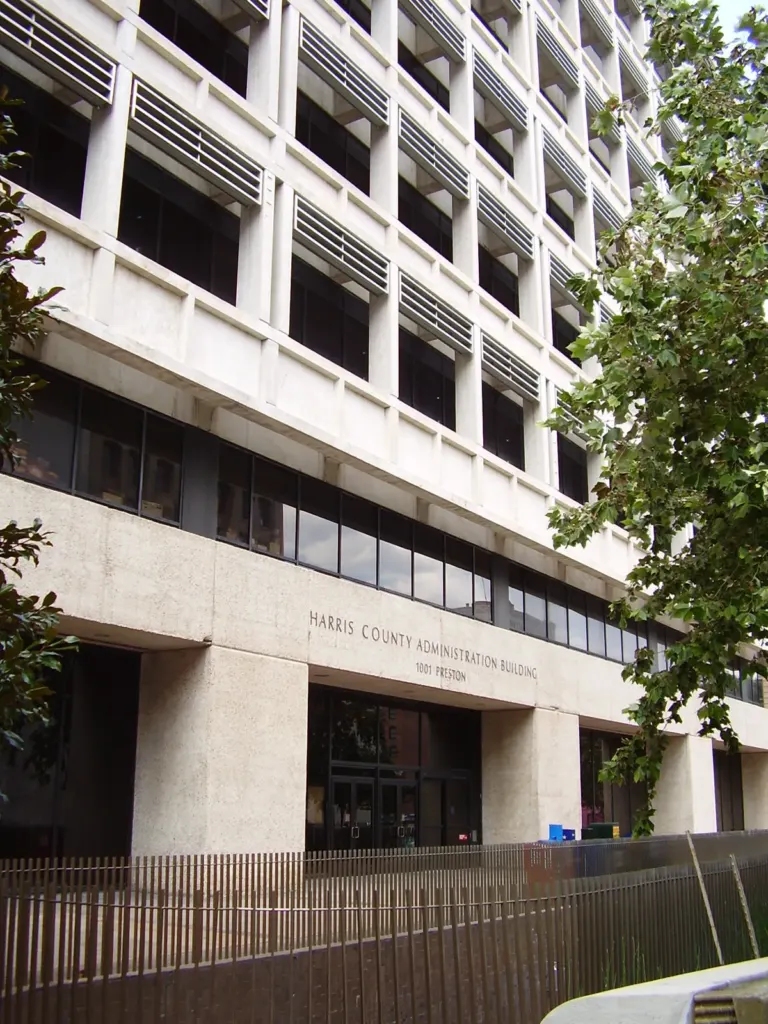
The Harris County Administration Building in downtown Houston. Photo: WhisperToMe via Wikimedia Commons, Public domain
Harris County property tax statements are going out this fall, and the county’s share of the bill will be noticeably larger for most homeowners. The new rate, adopted by Commissioners Court on Sept. 17, is one of the highest the county has set in two decades.
Here is what changed, why, and what to expect when the statement lands in your mailbox.
The number on the bill
The court approved a combined rate of about $0.67 per $100 of taxable value, up 7.6 percent from roughly $0.62 last year. That combined figure covers four entities whose rates the court sets: the county general fund, the Harris County Flood Control District, Harris Health and the Port of Houston Authority.
The county’s own maintenance and operations rate, the piece that pays for the general fund, rose to $0.41750 per $100 from $0.38066, according to court documents.
For a home valued at $400,000, the increase works out to about $193 more per year, according to Daniel Ramos, director of the county’s Office of Management and Budget. Houston Public Media put the average added cost at about $198. The exact amount depends on your home’s appraised value and any exemptions you have, such as the homestead or over-65 exemptions.
The county portion is only part of the bill. Cities, school districts, community colleges and utility districts set their own rates, and those appear on separate lines or separate statements depending on where you live.
How the vote went
The tax rate passed 3-1. Commissioners Rodney Ellis, Lesley Briones and Adrian Garcia voted for it. Commissioner Tom Ramsey voted against it. County Judge Lina Hidalgo left the room before the vote, saying she was “symbolically” stepping out because she considered the budget unsound.
The court then adopted a $3.09 billion budget for the fiscal year that began Oct. 1, on a 3-2 vote, with Ramsey and Hidalgo opposed.
“Today, we passed a budget for working people in Harris County,” Ellis said at a press conference, calling it a “tough vote.” “It was not an easy thing to do, but it was the right thing to do.”
Briones addressed homeowners directly. “Yes, homeowners, your taxes are gonna go up a bit,” she said, according to Community Impact. “I don’t take that lightly as someone who grew up check-to-check. But you know what will be more expensive? If we start slashing these critical services that you and your families depend on.”
Hidalgo called it “an irresponsible budget” and “an unsustainable budget,” and said it “kicks the can down the road again.”
Why the county says it needed more
The county faced a projected shortfall of about $181 million going into budget season. About 80 percent of its budget is funded by property taxes, so the rate is the main lever it has.
Officials pointed to several cost drivers. Briones said the county’s employee health care costs rose $89 million compared with last year. Pay equity and the justice system were other major factors, and the budget adds $15 million for indigent defense. Democratic commissioners also cited federal funding cuts that left the county covering more of the cost of some services.
To close the rest of the gap, the county is selling underused properties and raising some fees, including the cost for landlords to file eviction cases, Houston Public Media reported. Commissioners also ordered a review of employee health plans, with a suggestion that higher-paid workers contribute more to premiums.
Paying the bill
Statements from the Harris County Tax Assessor-Collector typically arrive in October and November. Under Texas law, property taxes are due by Jan. 31, 2027. Payments made after that date pick up penalties and interest starting Feb. 1.
A few practical points:
- If your mortgage company pays your taxes through escrow, the statement may go to the lender. Expect your monthly escrow payment to be recalculated next year to cover the higher bill.
- The tax office accepts payments online, by mail and in person. Card payments carry a processing fee, and electronic checks cost less. Current fees are posted at hctax.net.
- Homeowners who are 65 or older or disabled can defer taxes on a homestead, and installment plans are available in some cases. The tax office can explain eligibility.
- Check that your exemptions were applied. Missing a homestead exemption can cost far more than this year’s rate increase.
Two commissioners who voted for the increase, Briones and Garcia, are on the ballot for re-election on Nov. 3.



 By